
01
Routine clinical data
Our LinAge2 algorithm works with blood, urine, and standardised biomarkers that clinics already collect and trust.
Transform standard clinical lab data into transparent, actionable roadmaps for patient health. Beyond "Black Box" DNA tests, map system-level aging patterns to identify intervention
Scientifically validated biomarkers reveal how the body is aging and what can be improved
We turn routine lab data into a structured measure of biological aging that clinicians can interpret and treat.
Our LinAge2 algorithm works with blood, urine, and standardised biomarkers that clinics already collect and trust.
The clock looks at interactions across inflammation, metabolism, kidney function, liver stress, and other physiological domains instead of treating biomarkers in isolation.
The output is not just a number. Clinicians see biological age, confidence intervals, and the principal components driving the signal.
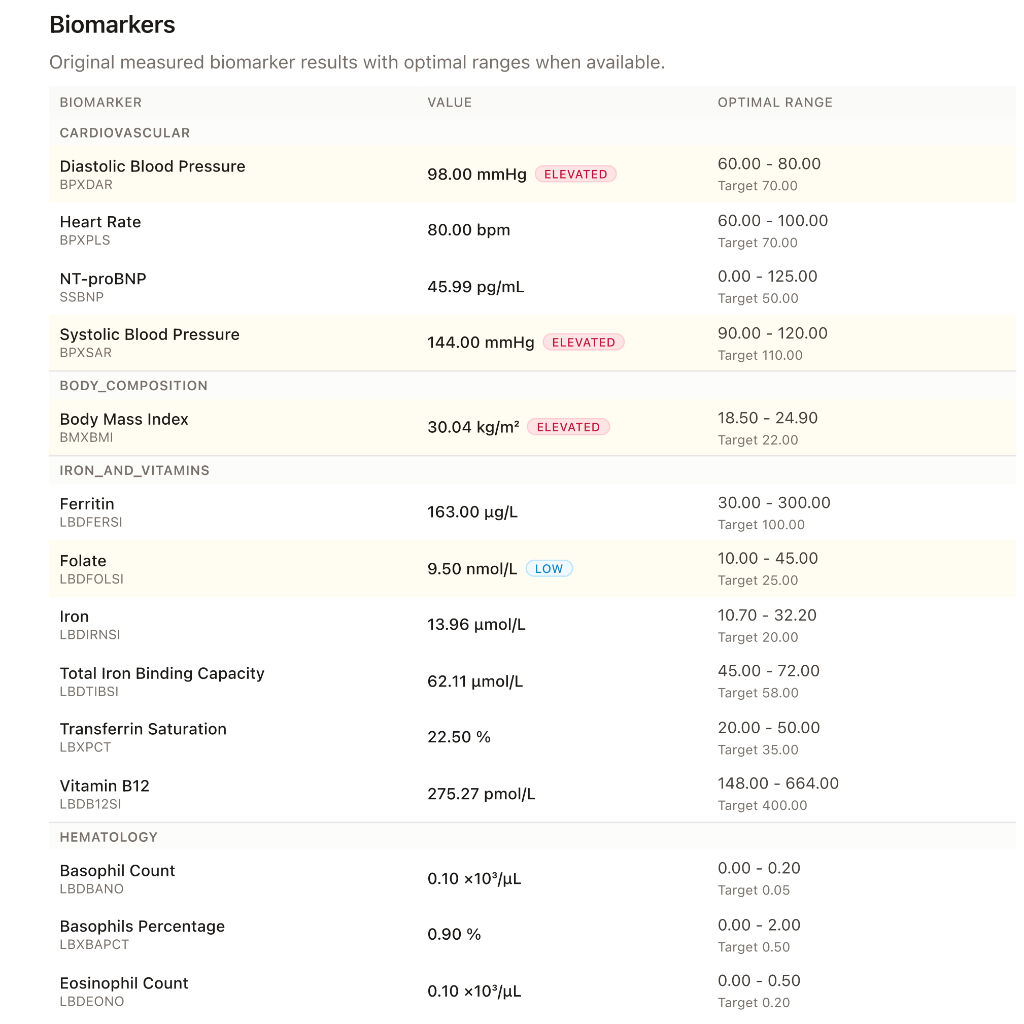
Routine inputs
Start with biomarker panels teams already know how to collect.
BeyondClock begins with routine blood, urine, and chemistry inputs, making the workflow easier to operationalize than specialized molecular sampling.
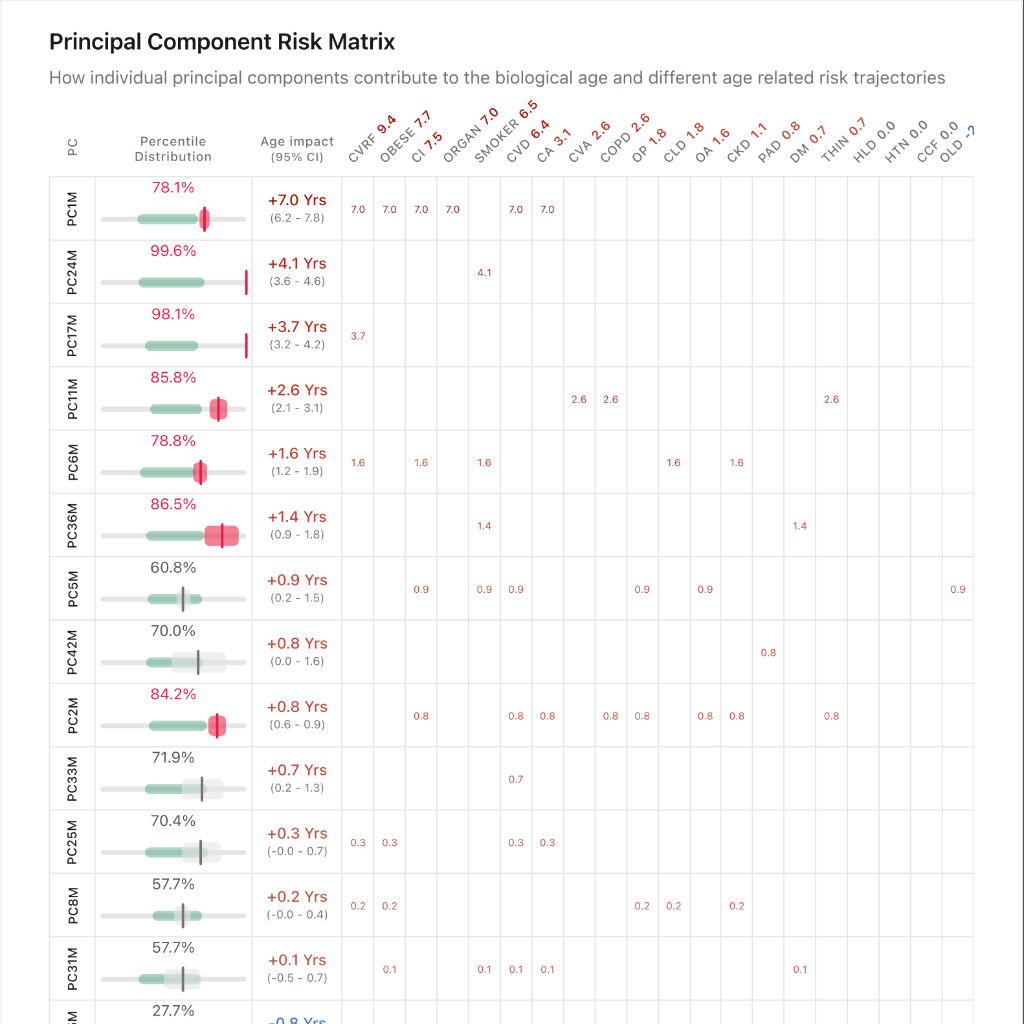
Systemic modelling
Model how physiological systems change together.
The model captures interactions across metabolic, inflammatory, renal, hepatic, and broader physiological domains instead of treating biomarkers as isolated signals.
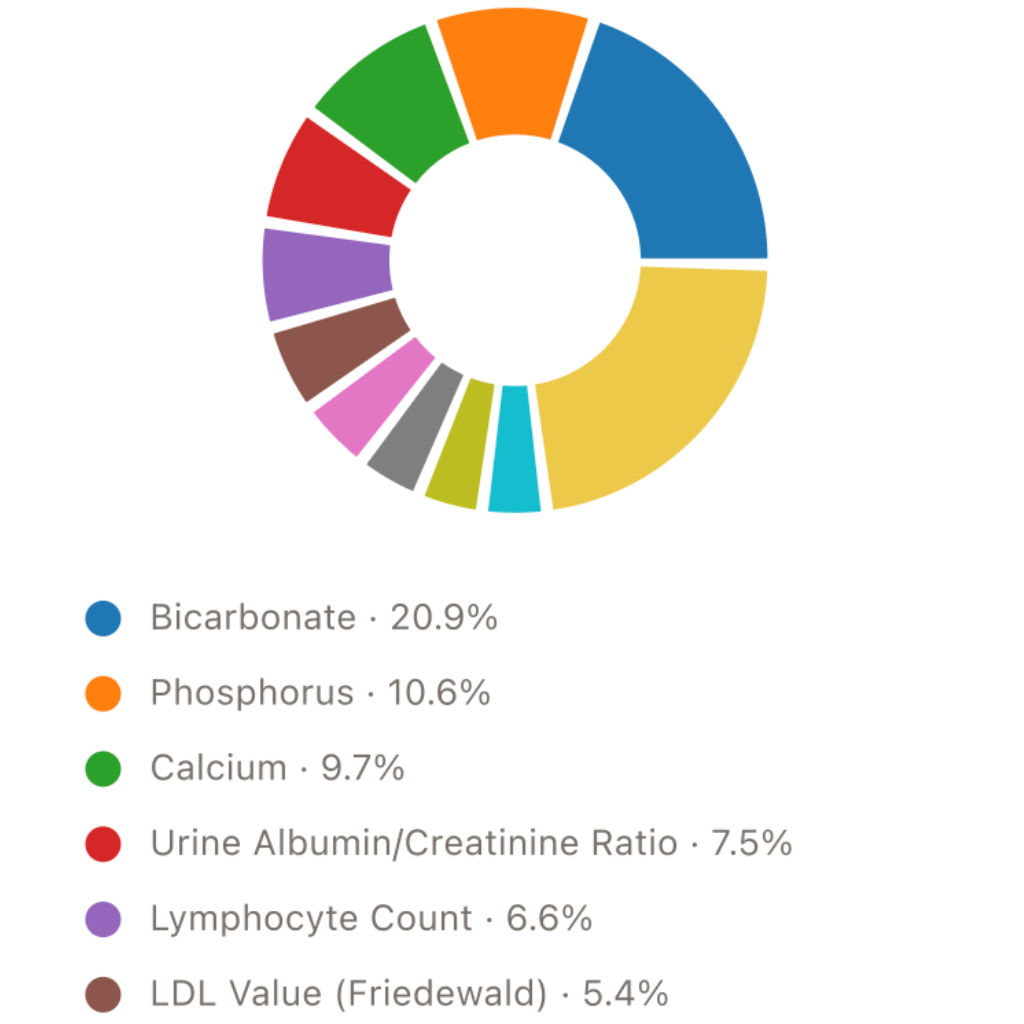
Explainable output
Show what is driving the signal, not just the final score.
Principal components expose the biological domains behind the readout so clinicians and operators can link the result to concrete physiological change.
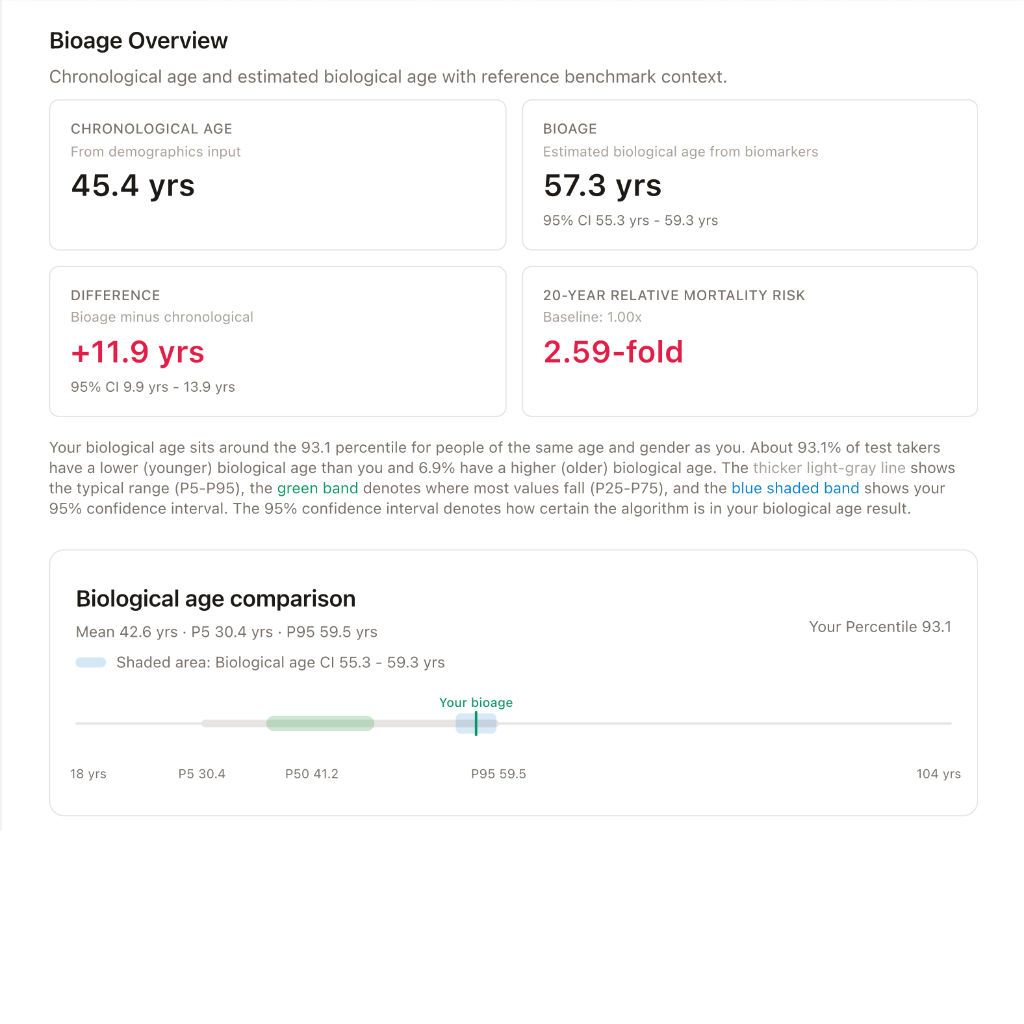
Biological age
Turn biomarker patterns into a clear biological age readout.
The biological age view brings the measurement into a format teams can understand quickly, with a clear comparison against chronological age and cohort context.
Applicable use cases for different needs
Use objective aging signals before and after an intervention to understand whether a program is moving people toward a healthier baseline.
Screen for biological rather than chronological aging patterns when identifying who is most relevant for an intervention or cohort.
Track whether participants are trending toward frailty, metabolic decline, or healthier recovery capacity as programs evolve.
Give teams a biological scoreboard for diet, supplements, health programs, or therapeutics instead of relying only on single-marker snapshots.
Turn longevity measurement into an operational capability for population health, preventive care, corporate wellness, or member engagement.
LinAge2 is supported by a peer-reviewed paper, “LinAge2: providing actionable insights and benchmarking with epigenetic clocks”, published in npj Aging. The work tests the model against other aging-clock approaches and focuses on the things that matter operationally: mortality prediction, benchmarking, and interpretability.
Subscribe for product news, research updates, and release announcements.